Current-affairs explainer | Updated for the 2026 context
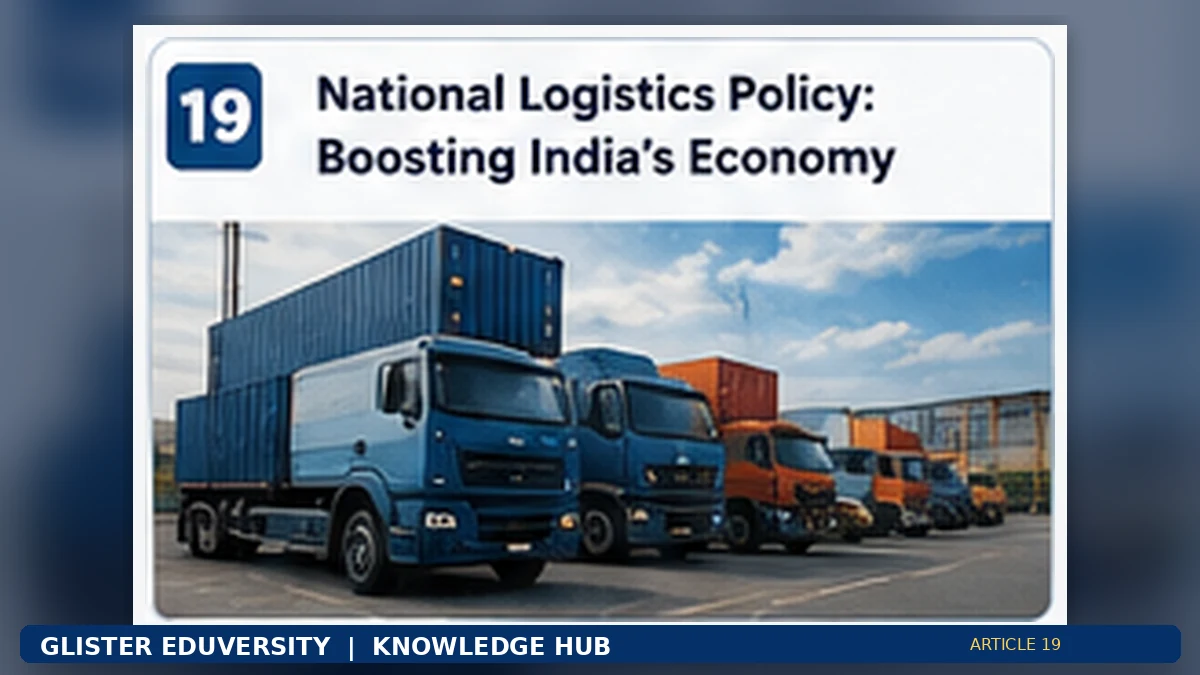
Logistics connects factories, farms, warehouses, ports, shops and consumers. Its cost and reliability influence inflation, exports, inventory, business location and customer service. The National Logistics Policy aims to develop an integrated, efficient, sustainable and digitally enabled logistics ecosystem.
Why This Topic Matters Now
India's logistics reforms increasingly combine physical infrastructure with data platforms, standards, process simplification and multimodal coordination. The goal is not only to build roads or ports, but to make the entire movement of goods more visible, predictable and efficient.
Key Points to Understand
- Multimodal logistics combines road, rail, air, waterways and ports.
- Digital tracking improves visibility and coordination.
- Warehousing quality affects product loss and delivery speed.
- Standardisation can reduce handling and documentation friction.
- Last-mile logistics matters for both businesses and consumers.
Opportunities and Positive Possibilities
- Better logistics can improve export competitiveness.
- Technology creates roles in analytics, fleet management and warehouse automation.
- Cold chains can reduce agricultural and pharmaceutical losses.
Challenges and Questions That Need Attention
- Fragmented responsibilities can slow coordination.
- Small logistics operators may struggle with technology adoption.
- Infrastructure expansion must consider safety and environmental impact.
What Students and Young Professionals Should Learn
- Study supply chains from supplier to final customer.
- Learn inventory, transport and warehouse metrics.
- Understand trade documentation and customs processes.
- Use data to identify delays and total cost—not transport price alone.
Conclusion
Efficient logistics is invisible when it works and costly when it fails. India's competitiveness will improve when infrastructure, digital systems, skilled people and predictable processes operate as one network.
Sources and Further Reading
This article is an educational explainer based on publicly available official or authoritative material. Readers should consult the latest source documents for updates.