Current-affairs explainer | Updated for the 2026 context
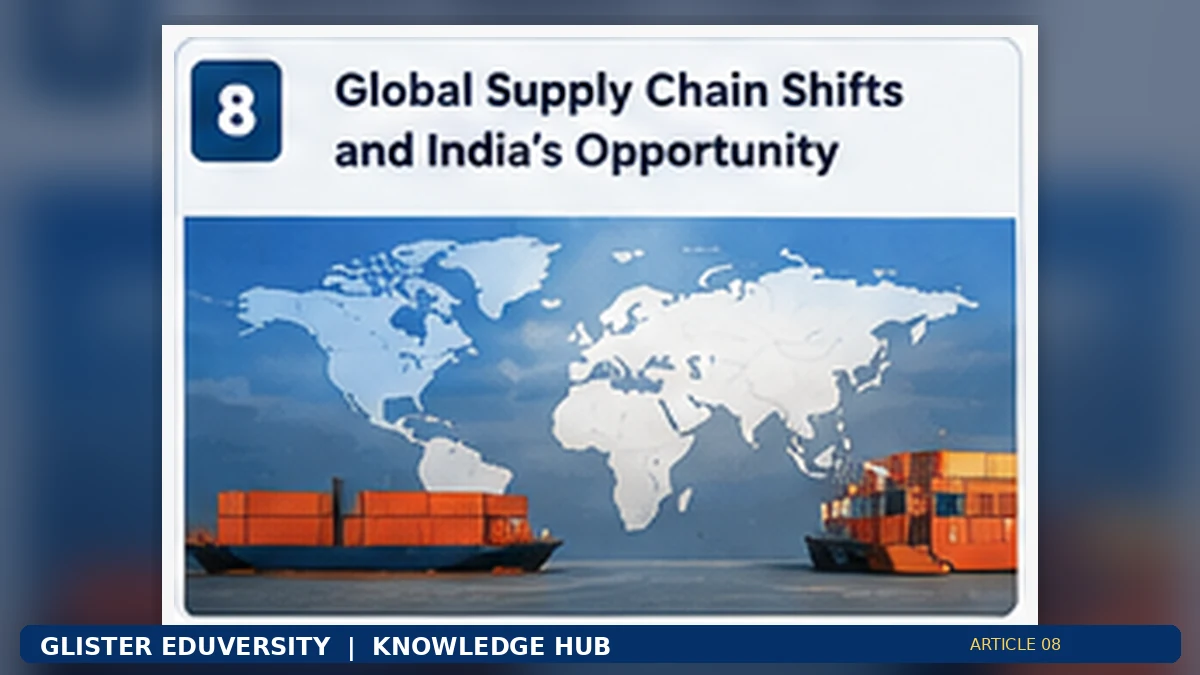
Global supply chains are being reshaped by geopolitical tensions, pandemic lessons, technology restrictions, climate concerns and the desire of businesses to avoid excessive dependence on a single location. Companies increasingly consider resilience, trusted partnerships and proximity to markets alongside cost.
Why This Topic Matters Now
India's scale, workforce, market, digital capabilities and industrial policy make it a potential location for manufacturing and services. However, opportunity does not automatically become investment. Reliable logistics, predictable regulation, quality standards, skilled labour, energy, infrastructure and supplier depth remain decisive.
Key Points to Understand
- Supply-chain resilience means having alternatives, visibility and recovery capacity.
- Trade corridors and logistics systems affect total delivered cost.
- Standards and quality assurance are as important as low production cost.
- Services, software and design are increasingly integrated with manufacturing.
- Small suppliers need technology and finance to join global value chains.
Opportunities and Positive Possibilities
- Electronics, pharmaceuticals, renewables, food processing and engineering can expand.
- Digital trade systems can reduce documentation and delays.
- Regional manufacturing clusters can strengthen supplier networks.
Challenges and Questions That Need Attention
- Frequent policy changes increase uncertainty.
- Infrastructure quality varies between locations.
- Global demand and trade rules can change quickly.
What Students and Young Professionals Should Learn
- Study supply-chain management, trade documentation and quality systems.
- Understand procurement, inventory and logistics data.
- Build communication skills for international business.
- Follow official trade data rather than isolated success stories.
Conclusion
India's supply-chain opportunity depends on consistent execution. The strongest advantage will come from combining scale with reliability, skills, standards, technology and efficient logistics.
Sources and Further Reading
This article is an educational explainer based on publicly available official or authoritative material. Readers should consult the latest source documents for updates.