Current-affairs explainer | Updated for the 2026 context
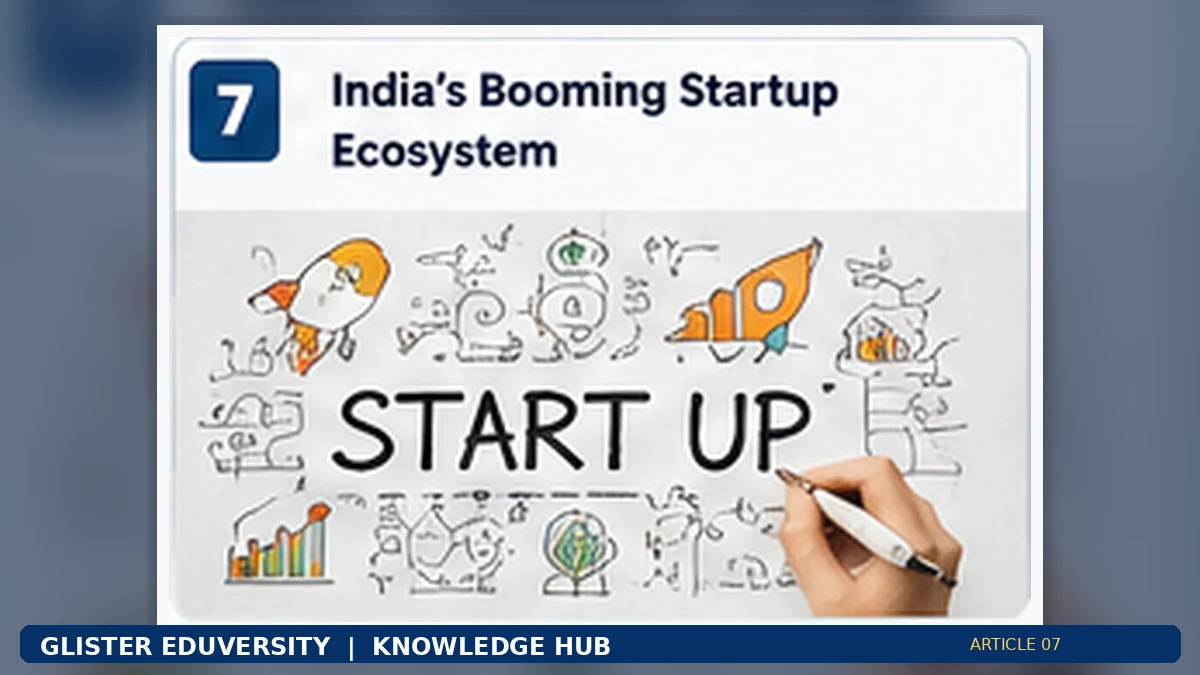
India's startup ecosystem has expanded across technology, finance, commerce, healthcare, education, agriculture, mobility and many other sectors. Startup India provides recognition, information, networking, mentorship and access to schemes designed to support innovation and entrepreneurship.
Why This Topic Matters Now
In 2026, the ecosystem is increasingly focused on sustainable business models, deep technology, domestic innovation and wider participation beyond major metropolitan centres. The public conversation is also becoming more realistic about profitability, governance, consumer protection and the high failure rate of early-stage ventures.
Key Points to Understand
- A startup seeks a repeatable and scalable model under conditions of uncertainty.
- Innovation may involve technology, process, distribution or business design.
- Funding is not the same as revenue or long-term success.
- Founders need compliance, accounting, contracts and customer understanding.
- Mentorship and networks can reduce avoidable mistakes.
Opportunities and Positive Possibilities
- Digital infrastructure has lowered entry barriers for many services.
- Public platforms offer mentorship, investor connections and seed-support information.
- Regional and sector-focused incubators can support new founders.
Challenges and Questions That Need Attention
- Cash-flow failure can occur even when a product receives attention.
- Weak governance and unclear founder agreements can damage promising ventures.
- Startups must meet data, tax, labour, consumer and sector-specific obligations.
What Students and Young Professionals Should Learn
- Learn customer research before building a product.
- Understand unit economics, cash flow and legal structure.
- Treat intellectual property and data protection seriously.
- Build resilience and evidence-based decision-making rather than chasing labels.
Conclusion
Entrepreneurship can create jobs and solve real problems, but the startup journey demands discipline. The most valuable founders combine imagination with financial control, ethical conduct, customer insight and a willingness to learn continuously.
Sources and Further Reading
This article is an educational explainer based on publicly available official or authoritative material. Readers should consult the latest source documents for updates.