Current-affairs explainer | Updated for the 2026 context
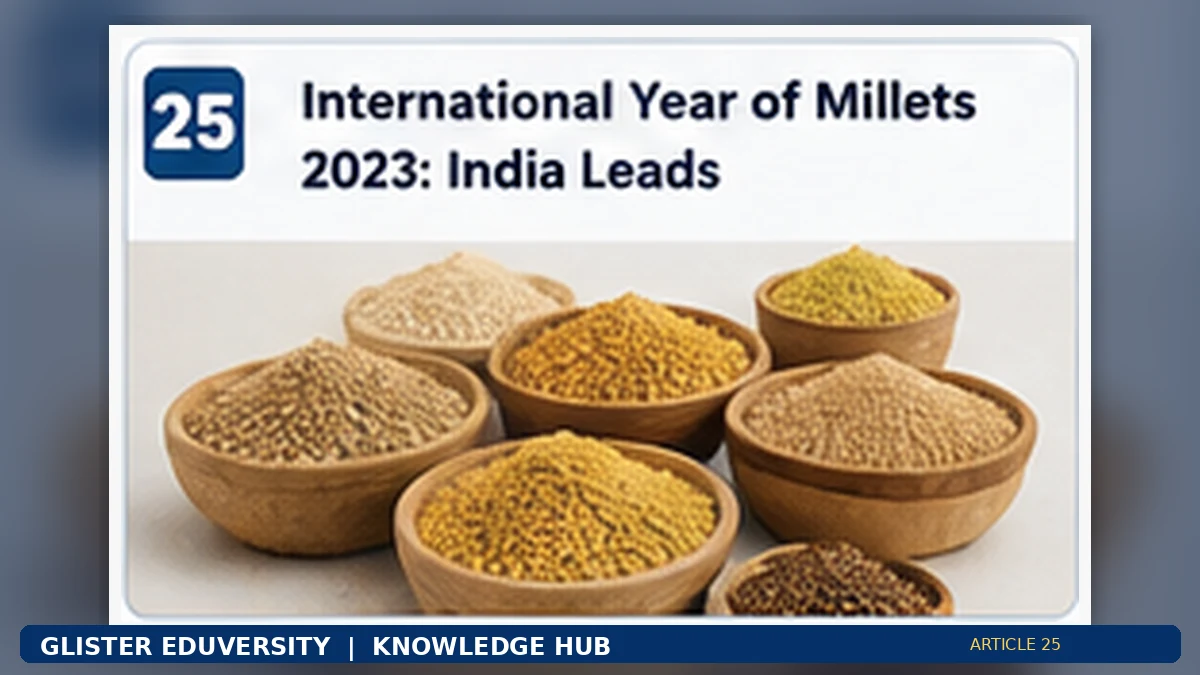
The United Nations declared 2023 the International Year of Millets following an initiative led by India. Millets include a diverse group of grains cultivated in different agro-climatic regions. They can contribute to dietary diversity, small-farmer livelihoods and climate-resilient agriculture.
Why This Topic Matters Now
The important question after the international year is whether attention becomes sustained demand, research, processing capacity and fair returns for farmers. Millets should be promoted as part of diverse diets rather than as a miracle food or a complete replacement for all other grains.
Key Points to Understand
- Different millets have different nutritional profiles and cooking uses.
- Many varieties can tolerate relatively dry conditions.
- Processing and convenient products influence urban demand.
- Local food traditions contain practical knowledge about preparation.
- Nutrition outcomes depend on the whole diet, not one ingredient.
Opportunities and Positive Possibilities
- Value-added millet products can support rural enterprises.
- Public meals and awareness can increase dietary diversity.
- Research can improve varieties, processing and consumer acceptance.
Challenges and Questions That Need Attention
- Market demand may be unstable after promotional campaigns.
- Farmers need reliable procurement and value chains.
- Highly processed products may reduce some nutritional benefits.
What Students and Young Professionals Should Learn
- Read food labels and ingredient lists.
- Understand the role of fibre, protein and micronutrients in a balanced diet.
- Explore regional recipes and agricultural diversity.
- Avoid exaggerated health claims.
Conclusion
Millets offer important nutritional, cultural and environmental value. Long-term success requires farmer-centred markets, good processing, honest nutrition communication and integration into varied, affordable diets.
Sources and Further Reading
This article is an educational explainer based on publicly available official or authoritative material. Readers should consult the latest source documents for updates.