
Current-affairs explainer | Updated for the 2026 context
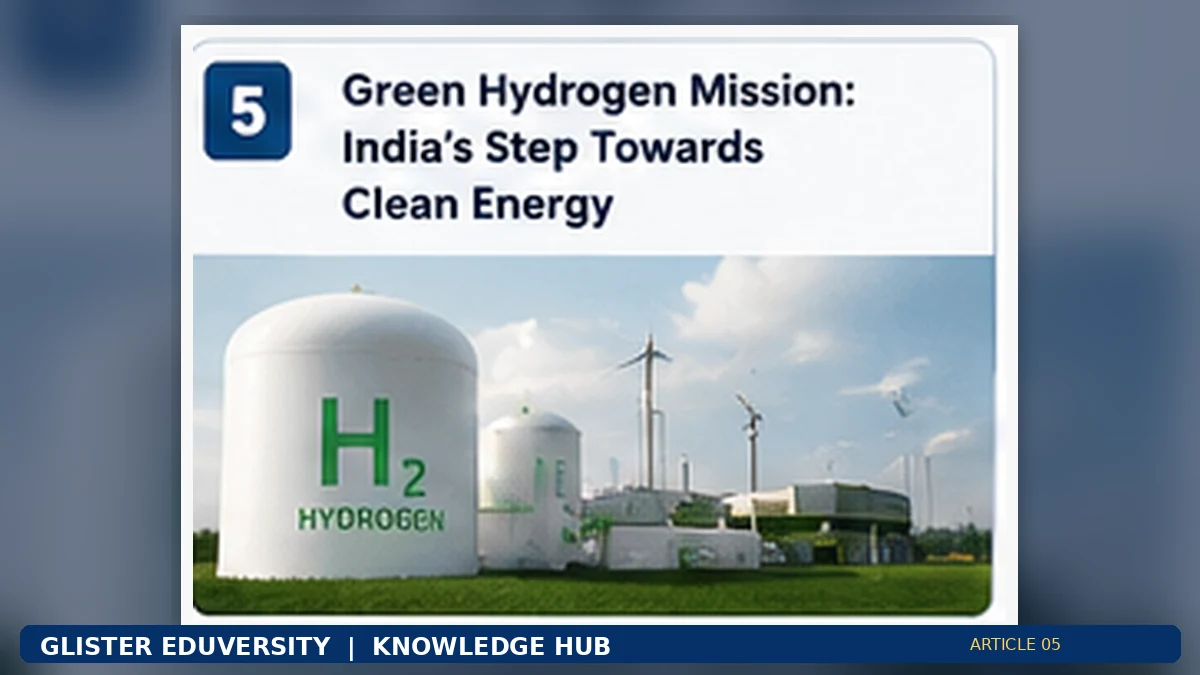
Green hydrogen is produced using renewable electricity to split water into hydrogen and oxygen. It is attracting attention because it may help decarbonise sectors where direct electrification is difficult, including fertilisers, refining, steel, shipping and some forms of long-duration energy storage.
Why This Topic Matters Now
India's National Green Hydrogen Mission seeks to create domestic production capacity, demand, supply chains, standards, research and skills. The mission carries a significant public outlay and aims to position India as a major producer and user while reducing dependence on imported fossil fuels and industrial feedstocks.
Key Points to Understand
- Green hydrogen depends on affordable renewable electricity and efficient electrolysers.
- Industrial demand is essential for commercial scale.
- Transport, storage and safety standards are critical.
- Domestic manufacturing can create opportunities in equipment and engineering.
- Water availability and location-specific planning must be considered.
Opportunities and Positive Possibilities
- New roles may emerge in renewable power, electrolysers, process engineering and safety.
- Industrial clusters can combine production, storage and end use.
- Research institutions can improve efficiency, materials and system integration.
Challenges and Questions That Need Attention
- Production remains expensive compared with conventional hydrogen in many settings.
- Infrastructure and long-term buyers are needed before projects become bankable.
- Claims of sustainability must account for electricity source, water use and lifecycle impact.
What Students and Young Professionals Should Learn
- Study chemistry, electrical systems, renewable energy and industrial processes.
- Understand the difference between green, grey and blue hydrogen.
- Follow standards and project data rather than promotional claims.
- Explore interdisciplinary careers linking engineering, economics and climate policy.
Conclusion
Green hydrogen is promising, but it is not a universal solution. Its success will depend on using it where it offers genuine environmental and economic value, supported by reliable renewable power, strong safety systems and realistic demand.
Sources and Further Reading
This article is an educational explainer based on publicly available official or authoritative material. Readers should consult the latest source documents for updates.