Current-affairs explainer | Updated for the 2026 context
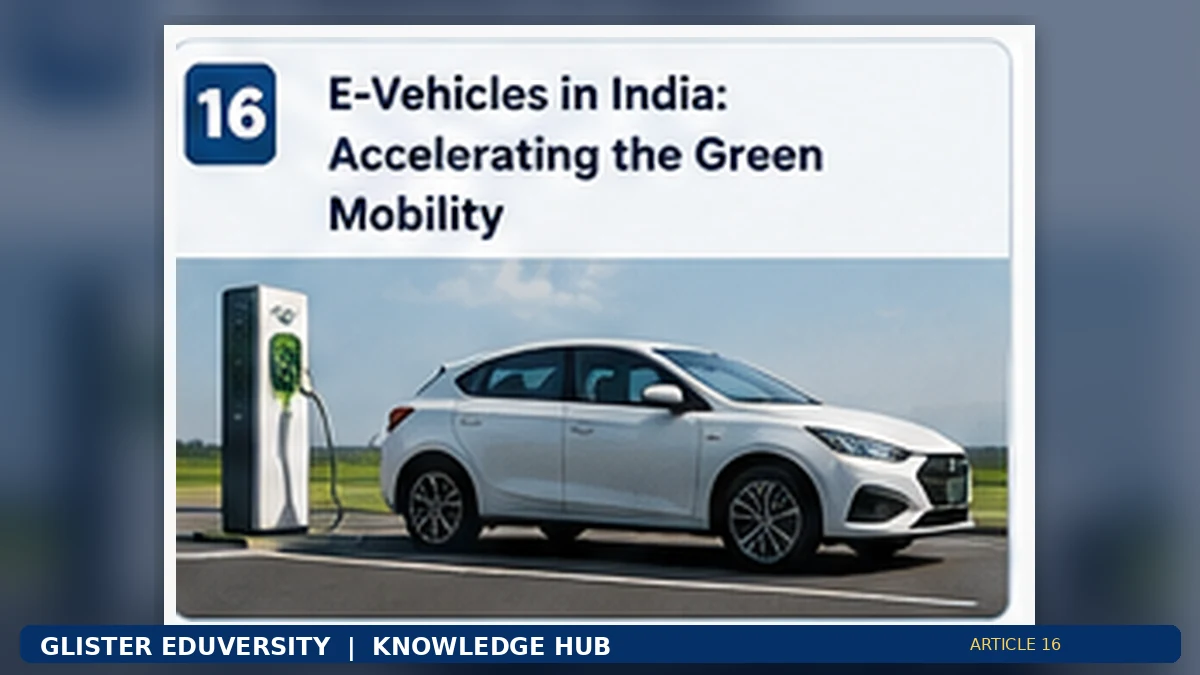
Electric vehicles can reduce local air pollution and oil dependence while supporting a transition towards cleaner transport. Their environmental benefit increases as electricity becomes cleaner and battery production, use and recycling become more sustainable.
Why This Topic Matters Now
India's EV market is developing across two-wheelers, three-wheelers, cars, buses and commercial fleets. Policy now focuses not only on vehicle purchase but also charging, domestic manufacturing, battery safety, public transport and recycling. Different vehicle segments will transition at different speeds.
Key Points to Understand
- Total cost of ownership can be more important than purchase price.
- Home and workplace charging influence convenience.
- Battery safety depends on cells, thermal management, design and maintenance.
- Electric buses and high-use fleets can deliver significant urban benefits.
- Recycling and second-life use will become increasingly important.
Opportunities and Positive Possibilities
- New jobs can emerge in battery systems, charging, software and maintenance.
- Fleet operators can reduce operating costs in suitable use cases.
- Renewable electricity can improve the lifecycle impact of EVs.
Challenges and Questions That Need Attention
- Charging access is uneven.
- Battery supply chains depend on critical minerals and global markets.
- Consumers need reliable information about range, warranty and safety.
What Students and Young Professionals Should Learn
- Compare real-world use patterns before choosing an EV.
- Understand battery capacity, charging power and range.
- Learn electrical safety and high-voltage service skills.
- Evaluate lifecycle impact rather than assuming every EV use case is identical.
Conclusion
Electric mobility is a major transition, not a single product trend. India will benefit most by combining vehicles with clean power, public transport, safe batteries, reliable charging and circular-economy planning.
Sources and Further Reading
This article is an educational explainer based on publicly available official or authoritative material. Readers should consult the latest source documents for updates.