Current-affairs explainer | Updated for the 2026 context
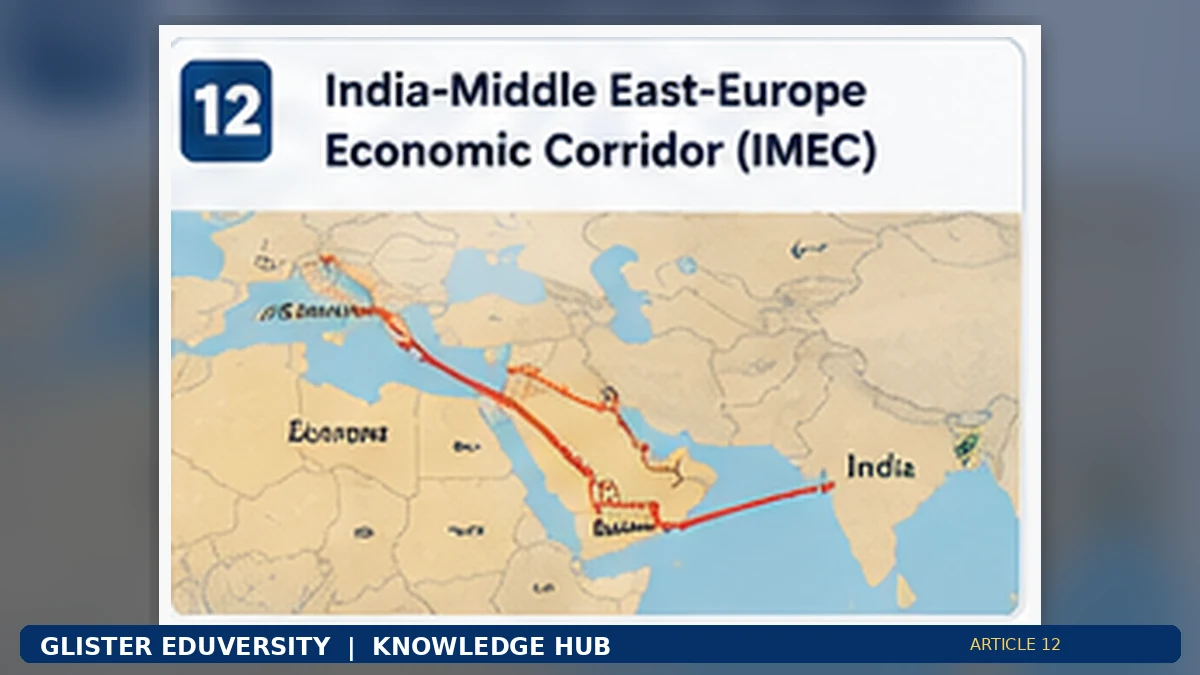
The India-Middle East-Europe Economic Corridor, or IMEC, was announced as a proposed multimodal connectivity initiative linking India with the Gulf and Europe. It combines maritime and rail connectivity and has also been discussed in relation to energy, digital links and supply-chain resilience.
Why This Topic Matters Now
The corridor remains a strategic long-term project requiring coordination among multiple countries, investors, ports, rail systems and regulatory frameworks. Statements through 2026 continued to recognise its potential, but large corridors are built through phased agreements, financing and infrastructure—not announcements alone.
Key Points to Understand
- The eastern corridor is intended to connect India with the Gulf.
- A northern corridor would connect the Gulf region with Europe.
- Ports, railways and customs systems must work as an integrated network.
- Digital and energy connectivity may complement physical trade routes.
- Geopolitical stability affects planning and investment.
Opportunities and Positive Possibilities
- Faster and more reliable trade routes can support exporters.
- Logistics, ports, engineering and finance may receive investment.
- The corridor can encourage regional standards and customs cooperation.
Challenges and Questions That Need Attention
- Capital requirements and cross-border coordination are substantial.
- Regional conflict can delay implementation.
- Economic viability depends on cargo volumes, tariffs and operational efficiency.
What Students and Young Professionals Should Learn
- Study maps with attention to actual transport modes and transfer points.
- Distinguish a memorandum from a completed project.
- Understand customs, ports, rail freight and supply-chain economics.
- Follow official bilateral and multilateral updates.
Conclusion
IMEC represents the strategic importance of connectivity in modern economics. Its success will depend on credible financing, security, technical integration and consistent cooperation among participating countries.
Sources and Further Reading
This article is an educational explainer based on publicly available official or authoritative material. Readers should consult the latest source documents for updates.