Current-affairs explainer | Updated for the 2026 context
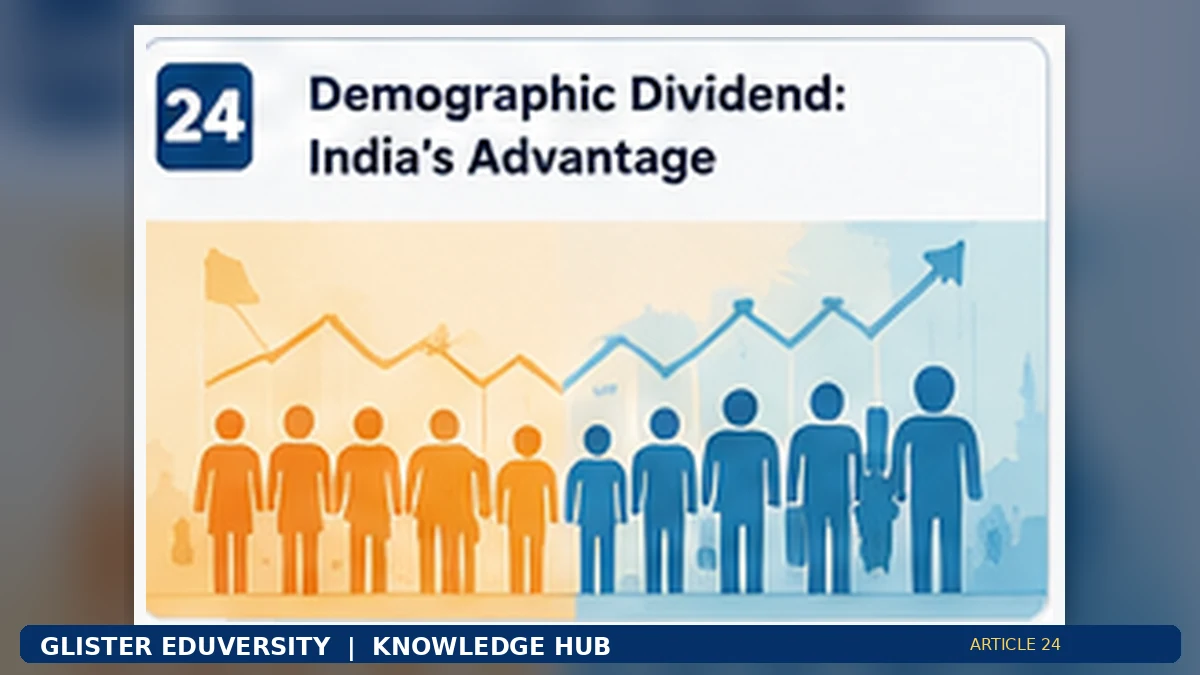
A demographic dividend can occur when a country has a relatively large working-age population compared with dependants. This age structure can support growth through labour, savings, entrepreneurship and consumption. However, population structure creates potential—not an automatic economic reward.
Why This Topic Matters Now
India's young population remains a major strategic advantage in 2026, but outcomes depend on education quality, health, women's participation, urban planning, mobility and employment. Different states are at different stages of demographic transition, so one national policy cannot address every regional need.
Key Points to Understand
- A young population must be matched with productive opportunities.
- Health and nutrition influence learning and labour productivity.
- Women’s education and workforce participation are crucial.
- Migration and urbanisation require housing and public services.
- Population ageing will eventually increase in importance.
Opportunities and Positive Possibilities
- A large workforce can support production, services and innovation.
- Youth entrepreneurship can respond to local and global needs.
- Investment in education can yield benefits over many decades.
Challenges and Questions That Need Attention
- Unemployment and underemployment can waste demographic potential.
- Skill mismatch can coexist with labour shortages.
- Regional inequality can increase migration pressure.
What Students and Young Professionals Should Learn
- Build transferable skills rather than relying on one job title.
- Understand labour-market data and participation rates.
- Value health, communication and digital literacy.
- Plan for lifelong reskilling as technology changes work.
Conclusion
India's demographic dividend is a time-bound opportunity. It will be realised through human development, productive employment and social inclusion—not simply through population numbers.
Sources and Further Reading
This article is an educational explainer based on publicly available official or authoritative material. Readers should consult the latest source documents for updates.