Current-affairs explainer | Updated for the 2026 context
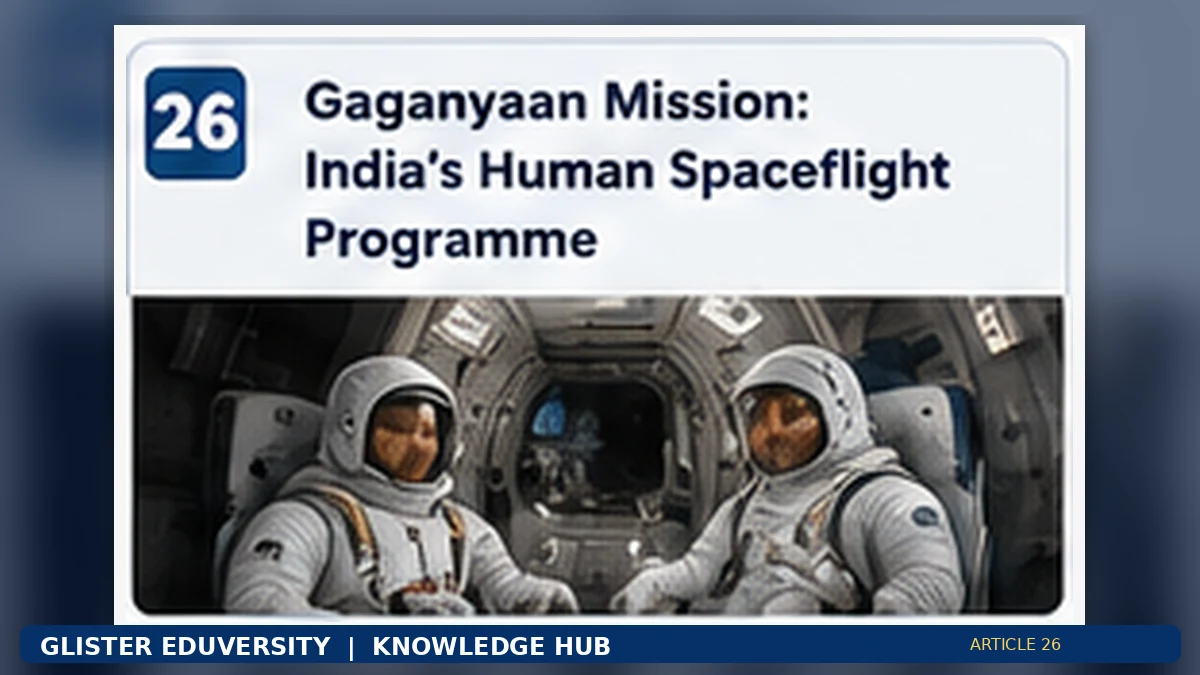
Gaganyaan is India's human spaceflight programme. Sending people to space requires far more than placing a spacecraft in orbit. It involves a human-rated launch vehicle, crew module, environmental control and life support, abort systems, training, mission control, communication, recovery and extensive uncrewed testing.
Why This Topic Matters Now
ISRO's current programme includes preparation for uncrewed missions and continued testing of human-rated systems. The campaign for the first uncrewed Gaganyaan flight has progressed through launch-vehicle assembly and mission preparations, reflecting the step-by-step nature of human spaceflight.
Key Points to Understand
- Crew safety drives design and testing decisions.
- Abort systems must function during multiple phases of flight.
- Life-support systems maintain pressure, air and temperature.
- Recovery operations require coordination across agencies.
- Uncrewed demonstrations reduce risk before carrying astronauts.
Opportunities and Positive Possibilities
- Human spaceflight supports research in materials, medicine and engineering.
- Students can explore aerospace, biomedical, software and control-system careers.
- Domestic suppliers can develop high-reliability components.
Challenges and Questions That Need Attention
- Human-rated systems require exceptionally strict reliability.
- Schedules may change when testing identifies issues.
- Programme cost must be balanced with scientific and national priorities.
What Students and Young Professionals Should Learn
- Respect testing delays as part of safety engineering.
- Study control systems, materials and human factors.
- Follow ISRO updates rather than speculative launch dates.
- Understand the difference between orbital, suborbital and deep-space missions.
Conclusion
Gaganyaan is a capability-building programme as much as a mission. Its success will come from disciplined engineering, transparent testing and the development of a skilled ecosystem capable of supporting human spaceflight safely.
Sources and Further Reading
This article is an educational explainer based on publicly available official or authoritative material. Readers should consult the latest source documents for updates.